
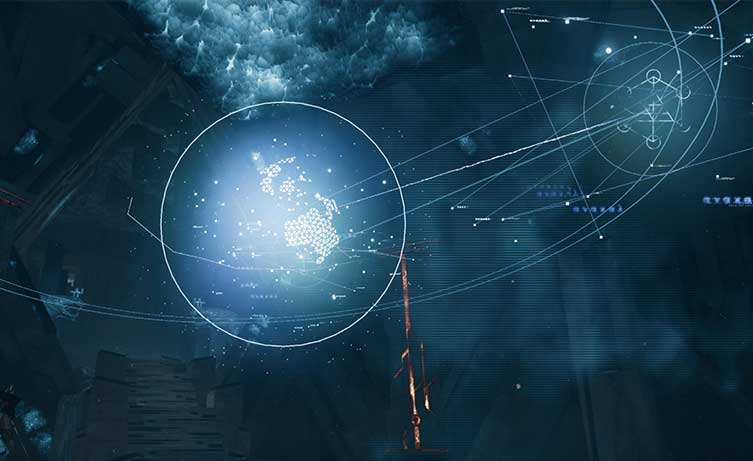
Atlantis Down Under
Written by Goro, January 8, 2019
Plato described what he knew about a wondrous, continent-sized island called Atlantis – how it came to be and how it fell – in his works Timaeus and Critias around 370 BC. More than 2 millennia later, we are still looking for that super ancient, formerly semi-divine civilization that supposedly existed 9000 years before Plato’s time, which is ancient enough to be ancient to the ancient Egyptians, one of the first high civilizations in known history. We keep searching for Atlantis because we do keep finding pieces of the puzzle, even if they don’t fit perfectly yet.
Where is Atlantis? Did it even exist?
Plato’s credibility is up there with anyone in history.
Plato was a philosopher in Classical Greece and the founder of the Academy in Athens, the first institution of higher learning in the Western world. He is widely considered the pivotal figure in the development of Western philosophy. Unlike nearly all of his philosophical contemporaries, Plato’s entire work is believed to have survived intact for over 2,400 years.

That doesn’t mean his writings were strictly literal. In fact, it is now generally assumed they were largely allegorical. Even so, it may also be true that we are not sufficiently appreciating just how much hidden information he may have crammed into his works in a coded form.
Over the past few centuries or so we have had an endless stream of theorists who have “discovered” Atlantis everywhere around the globe. So much so it’s difficult to find a place that’s not been “identified” as Atlantis.
Everywhere, except one place…

In 2019, the meaning and location of Plato’s Atlantis will be revealed at last, via…
A Conversation with Plato


Thank you very much, Plato, for this opportunity to ask you directly some important questions we still have in our time regarding Atlantis. I’m honored to have a conversation with such a…
Plato: What is your question?
Oh ok. Cranky old… extremely wise man I see. Let’s get straight into it then.
Is Atlantis just an allegory or is it a true historical account?
Plato: Applying binary thinking where it is not warranted limits your perspective and a limited perspective limits possibilities. Limiting possibilities is the last thing you want if you are seeking truth. As far as Atlantis, it is, to use your word, multicontextual. The story is the shadows cast on the walls of the cave. The shadows are real as far as their existence but they are still indirect reflections of their true source. Many levels truth has.
Ok, Yoda. So our task is to use these “shadows” – in this case the information contained in Timaeus and Critias – as a guide to steer ourselves towards the actual source.
Plato: You have the treasure map. But it’s not for fools. It’s crafted in such a way that it filters out the unworthy. Fools can only focus on the shadows.
That’s a little harsh…
Plato: Fools!
Okay, okay. So… did you intend your Atlantean writings to be a “time capsule” that would only be cracked open when the time is right?
Plato: You could say that, though there are many forces involved in esoteric matters such as this, not just me. Some things I am consciously aware of, some things I’m only subconsciously aware of. And with some things perhaps I’m only a puppet, directed by an unseen intelligence without my knowledge. Reality has countless levels. Many shadows.
Do we even have free will?
Plato: You can still swim in a river. But the river will inevitably flow out into the sea. Such is the nature of time. That’s not to say you can’t get out of the river. But that’s a whole different topic. You wanted to know about Atlantis?
Yes. Where the hell is it?
Plato: Again, there is no one-to-one correspondence, to use your terminology in your time. There is a treasure. But the treasure is ultimately a new perspective – or expanded awareness – that you would acquire from the process of trying to understand Atlantis. Having said that, I can point you to certain locations on the earth that will get you closer to the true source of Atlantis. And yes, I am aware that the Earth is a sphere.
How did you manage to know the earth is a sphe…
Plato: Do not insult me! Profound knowledge has always existed long before your time. We are, after all, talking about Atlantis here, are we not? Sometimes, throughout history, such knowledge is hidden from the masses, sometimes it’s out in the open. I’m glad that in your time everyone seems to know that Earth is round.
Umm…yes. Very glad that we don’t have flat-earthers… anymore… now. Sigh. Moving on. So you wrote Atlantis existed just beyond the Pillars of Hercules. But there is no sign of any continent-sized land as you described in your writing.


Plato: I sense your question is partly rhetorical, as I can see that you have already decoded enough of this riddle to realize there is a massive “as above, so below” element to this. You have already discerned that the Pillars of Hercules allude to the legs of the constellation Hercules, and that the north celestial pole went through them around 9000 years before my time…
Which is exactly when the Atlantean war took place per your writing.

Plato: Indeed. And you have already discerned that “beyond the pillars or legs of Hercules” was Vega, the pole star of the precessional Age of Virgo. The Age of Atlantis.
This was a fascinating metaphor you used and certainly makes a lot of sense once highlighted. The timeline, the celestial Atlantis… But where is the “below” counterpart of Vega here on Earth? Because, again, there is really nothing of note in the geographical area just beyond the Strait of Gibraltar.

Plato: There is nothing there. Remember, Atlantis sank into the sea. My exact words in Critias were: “But afterward there occurred violent earthquakes and floods, and in a single day and night of rain all your warlike men in a body sunk into the earth, and the island of Atlantis in like manner disappeared, and was sunk beneath the sea.”
Right. But we find no cities or structures at the bottom of the ocean outside the Pillars of Hercules either.
Plato: Keep digging.
What?
Plato: Keep digging.
Into the seafloor, you mean?
Plato: Dig through it. Let Atlantis sink all the way to the “bottom”.
Umm… but we both know Earth is round. If we keep digging or sinking through the earth, we’ll end up on the opposite side of the globe.
Plato: (Nodding.)
Ohhhhhh… Antipodes. Opposite points on the surface of the earth.

Plato: Yes. Do you realize that there is a place called “Antipodes Islands” in your time just off New Zealand? Clues are everywhere. Take a look at the antipode of the Pillars of Hercules or the Strait of Gibraltar. You’ll see that it’s New Zealand.
Well, would you look at that! Earth being translucent we would see New Zealand as a “leg” kicking open the Pillars of Hercules! That’s uncanny.


Plato: Uncanny especially because it’s a leg, yes?
Ohhhhh…. Just like the legs of the constellation Hercules we just talked about! As above, so below!
Plato: You got it, friend. Continue…
Continue?
Plato: Well, do you not know of any other land shaped like a leg? It’s not a “Pillar of Hercules”. It’s Pillars. Two of them. Two pillars, two legs.
Italy, of course. Ohhhhh…. I remember this. New Zealand and Italy are mirror images of each other. “Mirror images” as in they would look almost identical when flipped around like being viewed from the other side, or in other words, from an antipodal point of view!

Plato: Mmm hmm…
These leg twins are now… side by side.

Plato: Yes, it’s as if…
As if I’m supposed to bring them together, by shifting the maps or “rotating” the globe as if there are two overlapping globes.
Plato: You see it’s literally like a jigsaw puzzle. I understand you are quite familiar with this concept from discovering what you call the “Time Rivers”. The Nile, the Tigris-Euphrates and all these temporal streams. Just so you know, only the highest initiates, very small in number, have known about these “maps of time” throughout history. At the end of history, your time, the 21st century, such secrets are finally coming up to the surface. The rising of Atlantis is part of that revelation.
You took words right out of my mouth there, Plato. Now, when you say you guys knew about the Time R…
Plato: Bring the legs together!
Ok, Ok. Done! Whoa… Is that…?


Plato: There is your Atlantis. The antipodal Australia. The continent-sized “island” right outside of the Pillars of Hercules.
Oh my god. The Oz land Down Under in Oceania, is… Atlantis in the watery underworld?

Plato: You do see what I see, yes?
I just found… Atlantis?
Plato: That you did. Go tell your friends.
I need to… I need to examine this more closely.
Plato: As you should.
You wrote in Critias that the full extent of Atlantis is greater than “Libya” and “Asia” combined. And as was the custom in your time, by “Libya” you meant the land between Egypt and the Atlantic Ocean or the Pillars of Hercules, and by “Asia” you probably meant Asia Minor or what we now call Turkey to the north of Egypt.

Plato: Let’s find out, shall we?

Look at that. Australia is almost exactly the size of “Libya” and “Asia” combined, and in terms of area, Australia may well be “greater” than those combined, just like you wrote. Perfect.
Plato: You should also examine how the Atlas Mountains interact with the antipodal Australia.
Umm… Ok. I know that the Atlas Mountains, which are more or less named after the god of Atlantis and vice versa, essentially represent the southern “pillar” of Hercules, located immediately to the south of the Strait of Gibraltar.
Plato: How do they look in the overlay map?
They look… It’s as if the the strip of land where Australia and Africa overlap continues the mountain range.

Plato: And for good reason. We’ll get into that later. Next, take a look at the whole continent of Australia. It’s massive.
It’s huge. But most of it is empty in terms of population density.
Plato: And of all the empty spaces available in the Australian landmass, where did they place their capital city and largest city? You call them Canberra and Sydney.
They are… Whoa, they are right outside of the Pillars of Hercules!

Sydney in particular is perfectly where Atlantis would be per your description “outside the Pillars of Hercules”.
Plato: Such a mysterious coincidence is it not? Makes you wonder who knew what and when. You see, there is an “underground stream”, as you might say, that flows alongside the “main stream” of history. They rarely interact directly but the former’s influence over the latter is an aspect of reality that is hidden yet critical to how history progresses. Compare this to the interaction between the unconscious and the conscious minds. Largely hidden, but the conscious reality is to a surprising degree influenced by the hidden intelligence lurking below the liminal threshold. The crossing of the two streams is generally forbidden, but what happens is that… Ok, now I’m being directed to discontinue this discussion.
What? Who? Why?
Plato: I only have time for one more question.
Leaving so abruptly? But we have so many more questions!
Plato: Baby steps, friend, baby steps. We shall have more time in the future.
Okay. So… Is it accurate to say Australia is Atlantis? I ask because Australia, while a good match geographically speaking, is not really known for ancient ruins or great ancient civilizations as far as I’m aware.
Plato: Yes and no. As you have seen, Australia in terms of antipodal geographical configurations is Atlantis described in my writings. That does not, however, mean it’s fully Atlantis, just as Vega is not fully Atlantis in and of itself. Just as those celestial configurations helped you discern the antipodal Atlantis in Australia, the Australian Atlantis will lead you to another level of Atlantis. We can get into that next time, if you like.
That would be wonderful! Thank you very much for you time, this was…
Plato: …
Hello? Plato? Gone already. Sigh. What a fascinating dude. What a fascinating story! One way or another we’ll get to the bottom of this thing in 2019. As he said, there is a treasure waiting for us and it is the Hall of Records. But for now, more than enough new information to keep our minds busy for a while. ‘Til next time…
# # #