
Follow the white dove – Part 2
Written by Goro, April 22, 2019
[Continuing from Part 1…]
It is becoming increasingly clear to me that the very intense Easter/Resurrection/phoenix weekend we just had symbolically had a lot to do with the omphalos or the “navel” stone which is said to mark the center of the earth.
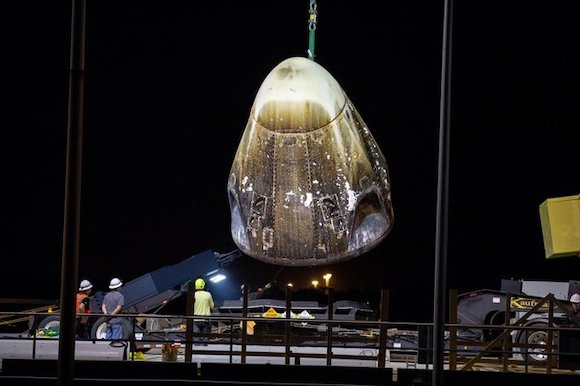
This, for instance, seems to have been the multicontextual “message” behind the SpaceX Crew Dragon explosion during a rocket firing test on April 20-21 at Cape Canaveral in Florida (overlapping Resurrection Day)…


This was the same Crew Dragon that came back from the space station back in March, quite literally a (technological) “stone fallen from heaven” or meteorite, which the omphalos implicitly is or represents also. Now compare the picture to the omphalos stone at the Temple of Apollo in Delphi, Greece, almost identical:
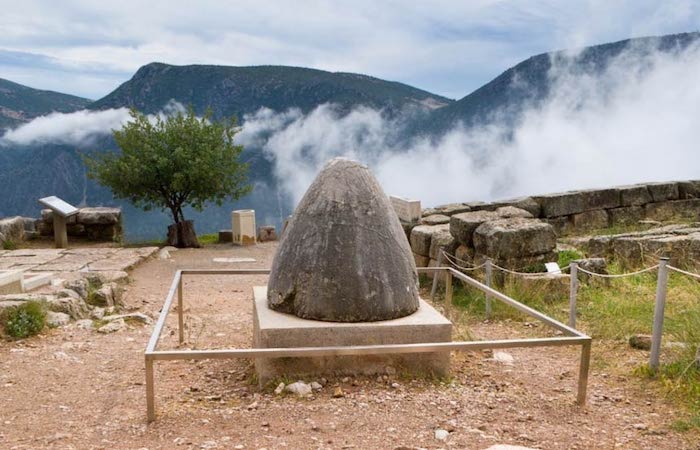
Now compare the basic shape to the map of Sri Lanka and India turned upside down:
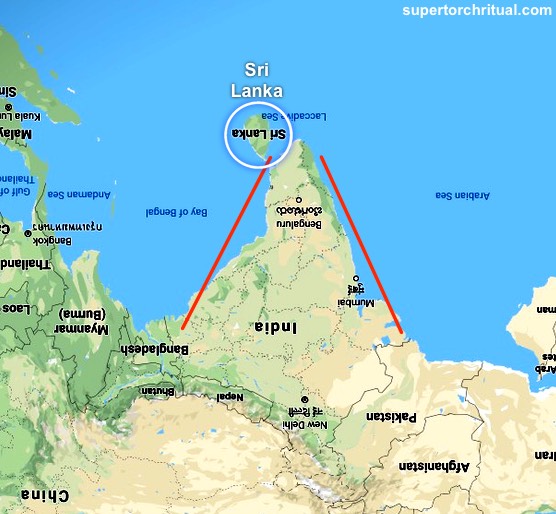

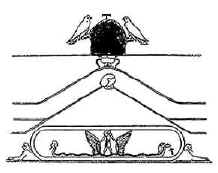
The hardest hit area on Easter was the capital city Colombo which via “Columba” would mean “dove“. We’ve already covered the columba/dove theme woven into the whole Easter weekend in Part 1. The location of Sri Lanka relative to the India “pyramid” (the shape of the country) makes it analogous to the two birds (eagles or doves) traditionally perched on the omphalos stone, as shown here in an ancient Egyptian depiction of the House of Sokar in the Duat underworld:
I discussed all this stuff back in 2005 on my old public website (and in my book The Time Rivers) and I feel it’s worth taking another look:
+ – + – + – + [Start excerpt] + – + – + – +
[It] reminds me of one legend, saying that the two doves/eagles perched on the omphalos stone represent the birds Zeus sent forth simultaneously from two sides (east and west) so that they would meet at the center of the world, the point subsequently marked by the omphalos stone. Given that our world, our planet, is really spherical and thus has no eastern or western edge whence to release the birds inward, a realistic interpretation would have the birds flying outward in opposite directions and then meeting at the other side of the globe 180 degrees away from the origination point. Their combined flying path would be analogous to a geodetic Great Circle.
Now I need to add a comment here that there is definitely a link between the ‘Ark’ and the geodetic ‘arcs’ drawn upon the planet (prominently expressed by a Great Circle). And by ‘Ark’ I refer to both the Ark of Noah and Moses’ Ark of the Covenant, which usually are not thought connected in anyway despite the generous terminological clue. For one, Moses as an infant was famously ‘saved from water’ just as was Noah. It is also instructive to remember, or learn, that the Ark of the Covenant’s primary purpose was to hold the stone tabletsbearing the Ten Commandments, and those stones are theorized by some scholars to have been meteorites… i.e. heavenly stones. As well, much like the omphalos stones, the Ark of the Covenant was said to allow direct communication with God/the gods.
Indeed, take a look at the following depictions – the Ark of the Covenant and the omphalos stone side by side…
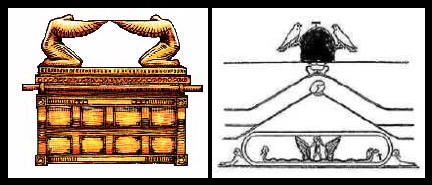
Almost certainly you’re looking at two versions of the same iconography. (This is just the tip of the iceberg.) It’s surprising that this is not widely recognized. If you think the biblical stories – including those concerning Jesus – are not heavily coded texts, you’re sadly mistaken. The literal tales readily apparent on the surface are merely ‘for kids’, so to speak. Literalness is one-dimensional and wisdom is never one-dimensional.
Here are some more clues supportive of the Ark-omphalos/stone connection:
- Thebes, an Ark-related Egyptian city, may have derived its name from thibbun meaning ‘navel’ (omphalos)
- Delphi, one of the claimed landing sites of Deukalion’s ark, was considered the ‘navel of the world’ (the omphalos), and this place held the famous omphalos stone that Saturn is said to have disgorged
- The name of Delphi’s patron sun-god, Apollo, supposedly means ‘the stone’
- In front of the Ark in the Temple’s Holy of Holies was the ‘foundation stone of the world’
—
And in Greek myth is found a direct connection between the Ark/deluge, heavenly stones, and Genesis seeding, as I happened to point out in The Time Rivers (pp.180-1, emphasis added):
Stones even figure prominently in the Greek version of the Great Flood story, as we are told that:
“[After the deluge] Themis [Zeus’s wife] appeared in person, saying: ‘Shroud your heads, and throw the bones of your mother behind you!’ Since Deucalionand Pyrrha [Deucalion’s wife] had different mothers, both now deceased, they decided that the Titaness meant Mother Earth, whose bones were the rocks lying on the river bank. Therefore, stooping with shrouded heads, they picked up rocks and threw them over their shoulders; these became either men or women, according as Deucalion or Pyrrha had handled them. Thus mankind was renewed, and ever since a ‘people’ (laos) and ‘a stone’ (laas) have been much the same word in many languages.” [Robert Graves, The Greek Myths, 38.d.]
Obviously, then, stones are an integral part of the ‘ark complex’. But why is this? Is there a particular reason why such significance should be accorded to stones? As we will see, the indications are that it has much to do with the sacred stones being symbolic of the heaven-earth unification…
First, the stones’ connection to heaven arises from their meteoric nature: the Benben Stone, the navel stone, and such are often said to be meteorites. Similarly, according to some scholars the Ark’s stone tablets were pieces of a meteorite (and the Ark itself has been associated with ‘celestial fire’).
The meteoric nature of the ark-stone is also strongly suggested by the Holy Grail. Like the two Arks (of Moses and Noah), the Holy Grail and the Ark of the Covenant have so much in common that they are often viewed as one and the same. And it happens that the Holy Grail was sometimes described as a stone – e.g., in one of the most influential literary works on the relic, Parzivalby Wolfram von Eschenbach (c. 1200 AD), the Grail is called lapsit exillis, usually interpreted to mean ‘stone from heaven’ (lapis ex caelis) or ‘it fell from heaven’ (lapsit ex caelis).
Because we’ve touched on the Time River Theory, let me add here that according to various traditions researched and presented in The Sign and the Seal by Graham Hancock, the Ark of the Covenant was taken to Ethiopia – the land of Lake Tana – and the relic at one time was kept on an island in Lake Tana itself for about 800 years! (So you can see why the TRT is increasingly becoming relevant… and it’s just a little taste of its smoldering force.)
+ – + – + – + [End of excerpt] + – + – + –
Fascinating stuff, isn’t it? We should be able to connect the dots more effectively with all this in mind during this period.